I’m not sure if I was born as a clown, but in my philosophy there’s a clown in each of us, it might just take some time to realise or discover that. I am happy that I have done so and would love to help others with that!
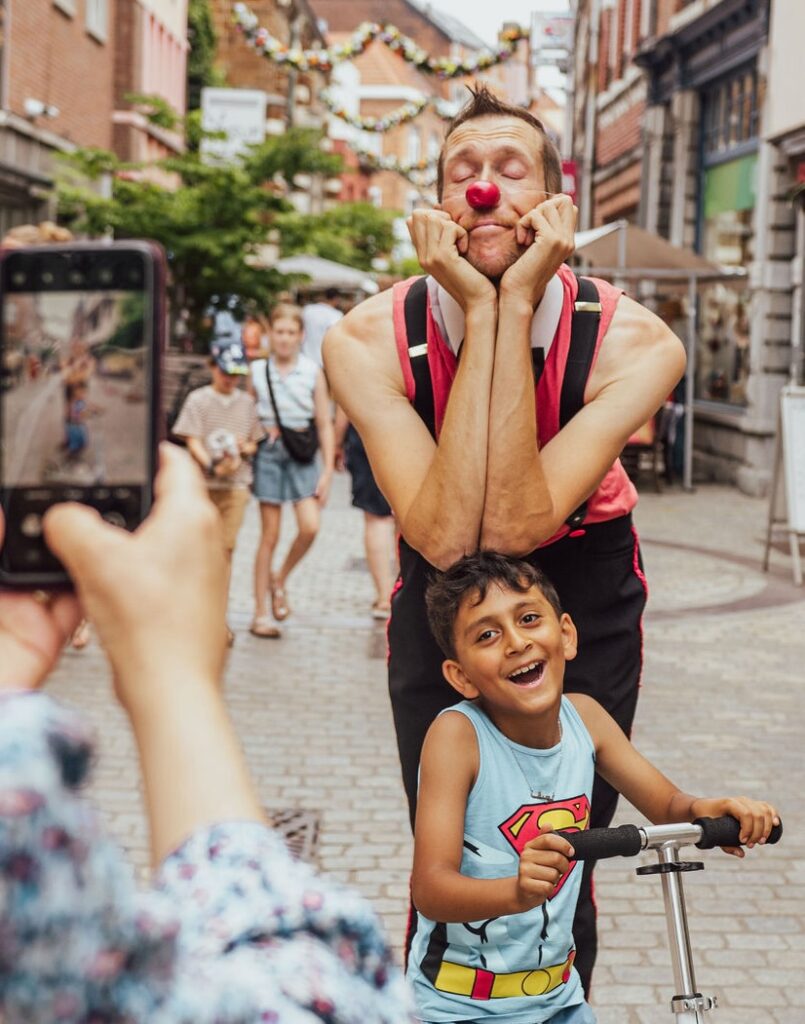
From activist to clown-activist
Besides that I must have seen a few clowns in some visits to the circus and that Mr. Bean was a regular visitor on our families TV screen, I got for the first in contact with Clowning in the No Border Camp in Brussels.
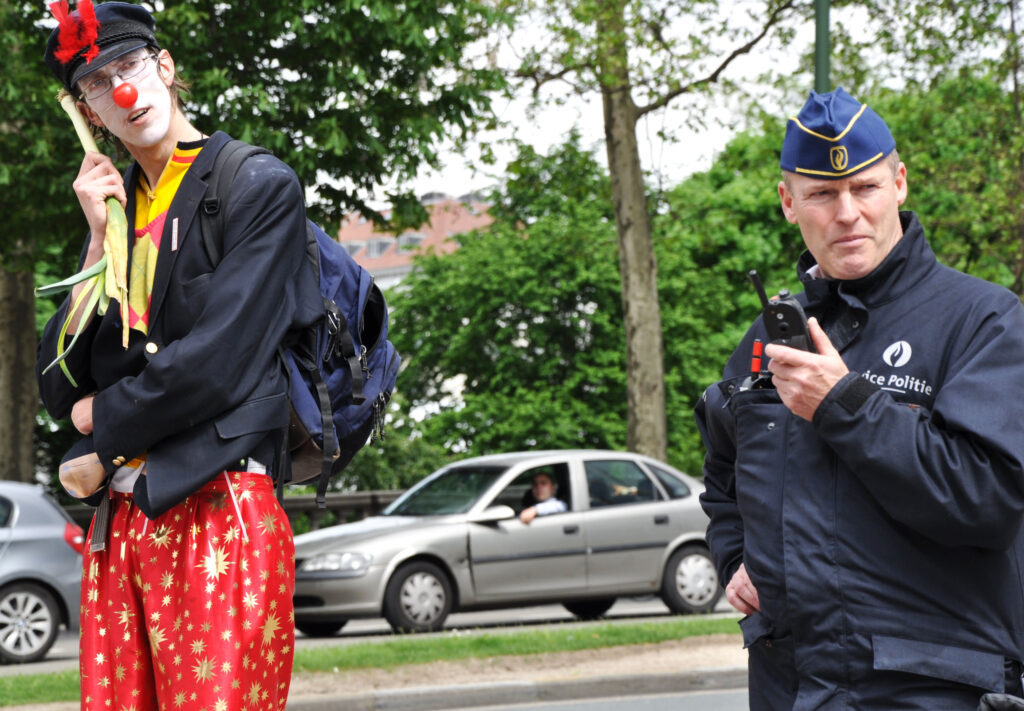
A group of French clown activists were there to introduce us into the Clandestine Insurgent Rebel Clown Army.
n Brussels where I went to live a few years later there was a local clown brigade that was member of a bigger collective of artivists ( artistic activists ). So I have participated in a few actions with them.
In and around this movement I met other clowns, like Eva Ribeiro, who became a friend later. She was my first clown teacher during some workshops weekends. We later even travelled together to Romania where she was invited to teach clown activism in a local campaign against a gold mine in Rosia Montana.
Later, in those first chapters of my clown life, I worked with other teachers like Micheline Vandepoel.
The smallest mask in the world
In these first introductions into clowning, the red nose, the smallest mask in the world, was usually always present. Masks allows us to transform more easiily into different states or in different versions of ourselves.
Later on the red nose disappeared a bit from my practise. My clown practise became more and more mixed with my juggling.
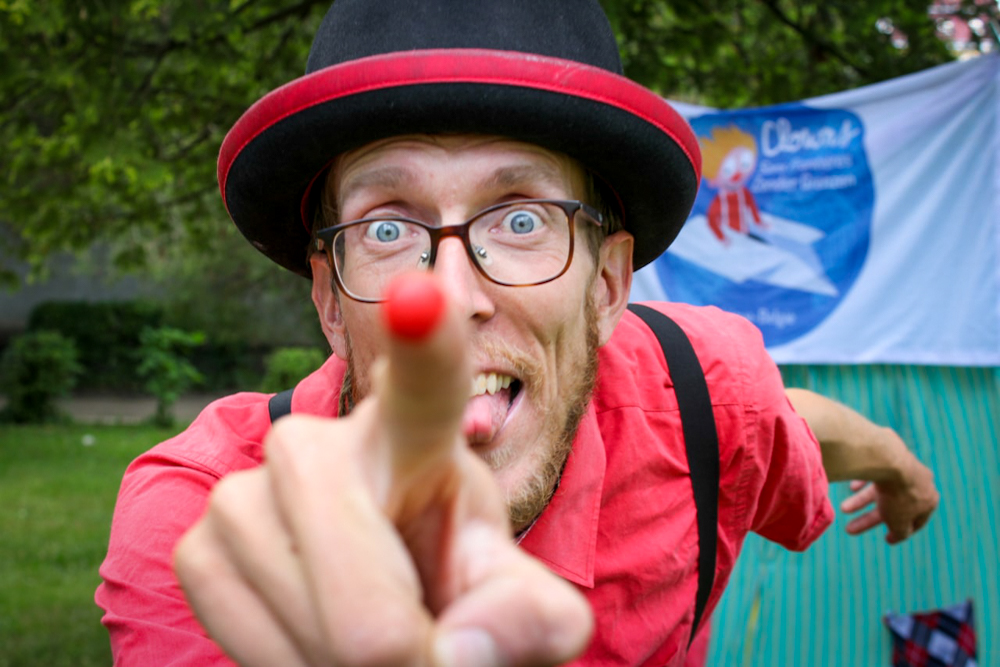
Juggling and clowning is a good marriage because of the accidents that will eventually occur. Accidents ( and the reaction to them ) are the gifts of the clown Gods, it’s what makes the clowns live , at least if they are shared. Emotional reaction to accidents or conflicts (another essential) is what makes us human and what makes clowning universal even though that the red nose and some other more cliché elements of the clown might not be.
A skill to pimp your own life
Dealing with and sharing emotions were not my biggest skills in my younger life, but it was for sure (but not only) through clowning that I got more into this through technique of breath work and body awareness. d
Like many others I have also been at the point of emotional breakdown in (intensive) clowning courses like many others get very close to deeper parts of themself which are not always easy to deal with. Clowning is a technique that is being used in creative therapy for example by Holly Stoppit (UK) with whom I hope to soon be working together.
Clowns that support others their therapy
I met the local Brussels Clowns without borders for a first time in Brussels during a performance they did in the emergency refugee camp during the beginning of Syria crisis. Later when I formally joined them I played and educated in asylum centers, clandestine refugee camps and internationally in Cyprus, Hungaria, Ukraine and several times in Romania.
After my 5 years of travelling escapes and seasonal work I wanted to focus more on clowning and one of the things that I wanted to do was clowning in hospital clowns.
So I signed up for a extensive 14 day care-clown workshop with several moments of practise in real life situations (hospitals, retirement homes and residential care for people with handicaps).
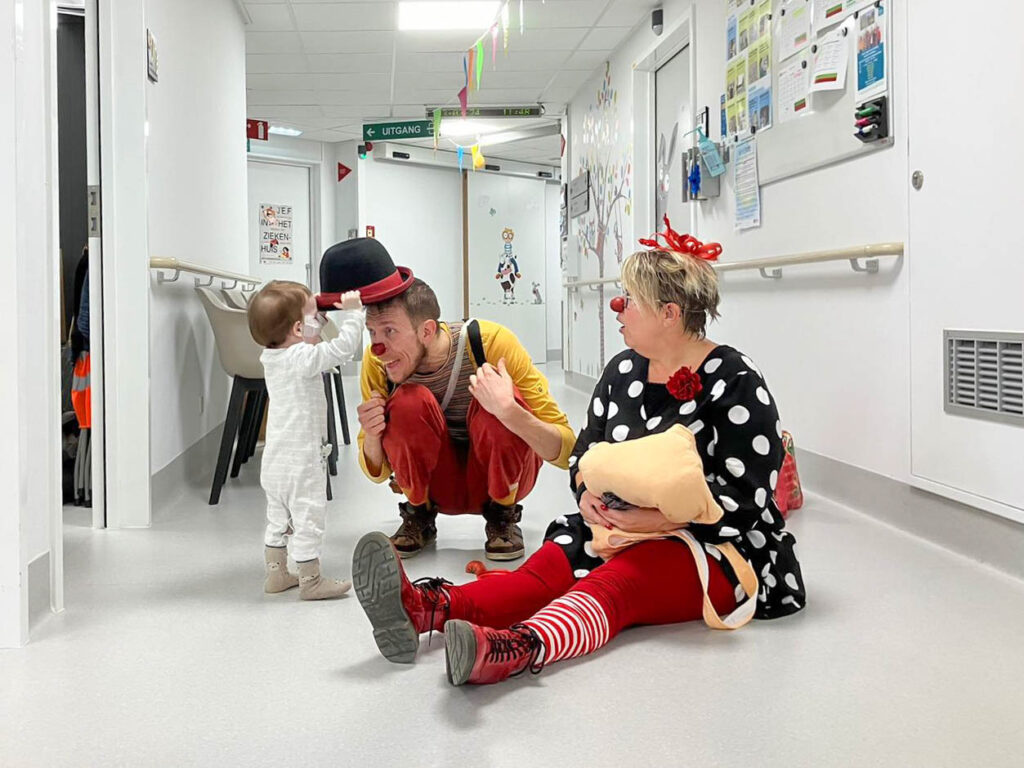
I recently joined Mediclowns, an organisation that sends clowns to pediatry sections of hospitals in the region of Limburg (where I was born and raised).
I will later add here some video’s of inspirational clowns